About
Émile Souvestre (April 15, 1806 – July 5, 1854) was a French novelist who was a native of Morlaix, Finistère. He was the son of a civil engineer and was educated at the college of Pontivy, with the intention of following his father's career by entering the Polytechnic School. However, his father died in 1823 and he matriculated as a law student at Rennes but soon devoted himself to literature. He was by turns a bookseller's assistant and a private schoolmaster in Nantes, a journalist and a grammar school teacher in Brest and a teacher in Mulhouse. He settled in Paris in 1836. In 1848 he became professor in the school for the instruction of civil servants initiated by Hippolyte Carnot, but which was soon to be cancelled. He began his literary career with a drama, played at the Théâtre français in 1828, the Siege de Missolonghi. This tragedy was a pronounced failure. In novel writing he did much better than for the stage, deliberately aiming at making the novel an engine of moral instruction. His first two novels L'Echelle de Femmes and Riche et Pauvre met with favourable receptions. His best work is undoubtedly to be found in the charming Derniers Bretons (4 vols, 1835-1837) and Foyer breton (1844), where the folk-lore and natural features of his native province are worked up into story form, and in Un Philosophe sous les toils, which received in 1851 a well-deserved academic prize. He also wrote a number of other works--novels, dramas, essays and miscellanies. In 1846, Souvestre published the ambitious Le Monde Tel Qu'il Sera [The World As It Will Be], a full-blown dystopia and science fiction novel.
Known for
Details
- Born
- 15 Apr 1806
- Died
- 5 Jul 1854
- Country
- France
- First book
- The World as it Shall Be, 2004
Similar authors
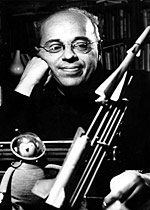 Stanislaw LemSolaris
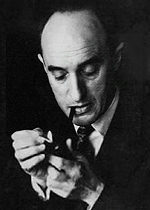 Pierre BoulleTrouble in paradise
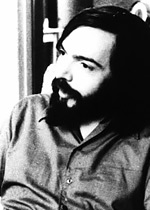 John SladekTik-Tok
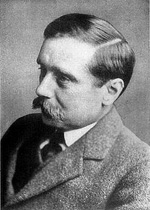 H. G. WellsThe Invisible Man
 Alfred BesterTiger, Tiger!
 C. M. KornbluthThe Space Merchants
 Thomas M. DischCamp Concentration
 James Patrick KellyBurn
 James E. GunnThe Joy Makers
 Brian StablefordThe Florians
 Rudy RuckerWhite LightJJack WodhamsThe Authentic Touch